
How drought changes horse ownership
I remember speaking with a horse owner in central California last summer, Sarah Miller, who was facing mandatory water restrictions. She had to drastically reduce turnout time for her three horses, and the cost of imported hay nearly doubled. This isn't an isolated incident; it’s a growing reality for horse owners across the country. Climate change is bringing more frequent and intense droughts, directly impacting the ability to maintain horse properties.
When the grass dies, the bills start climbing. I've seen hay prices double in a single season because local growers couldn't get enough water to their fields. You aren't just paying for water; you're paying for the lack of it through every bale of alfalfa or timothy you bring in.
The impact isn’t uniform. While the Western US is often the first to come to mind when discussing drought, areas in the Southeast and even the Midwest are experiencing increasing water stress. Texas, Oklahoma, and parts of Colorado are also facing significant challenges, and the situation is expected to worsen in the coming years. Understanding these regional variations is crucial for anyone considering a horse property purchase.
It’s easy to think of these issues as something for the future, but the reality is that many horse owners are dealing with these challenges right now. Adaptability and proactive planning are no longer optional – they’re essential for responsible horse management.
The states where water is running thin
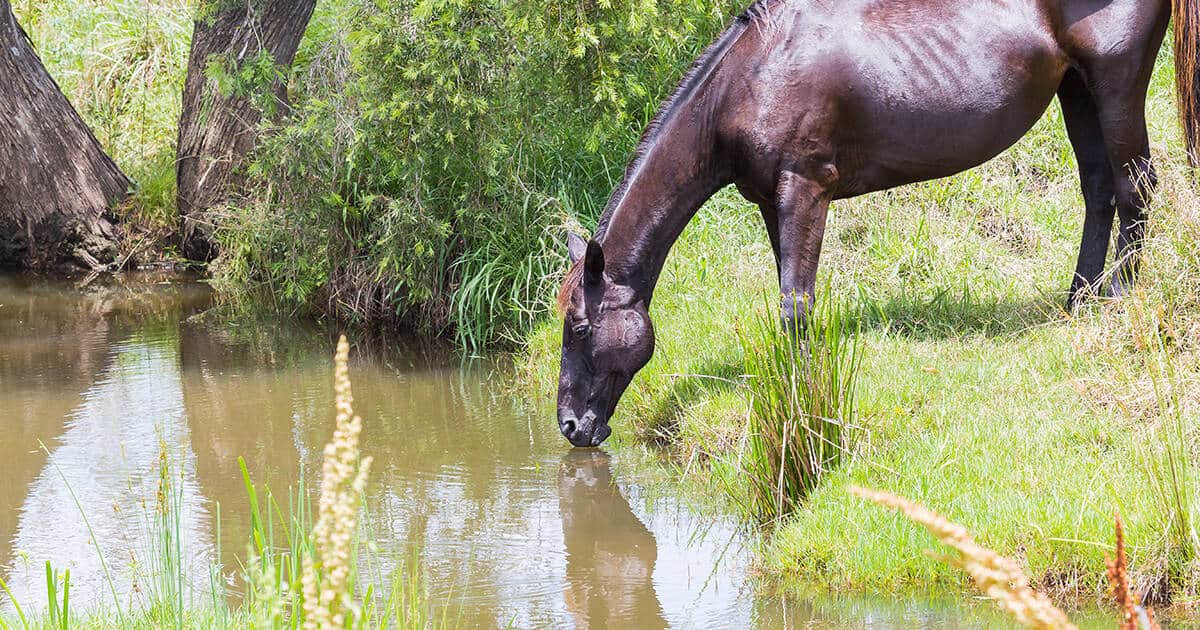
Several states are consistently identified as facing high levels of drought risk. As of late 2026, according to the US Drought Monitor, California remains in a state of prolonged drought, with significant portions of the state experiencing "extreme’ or ‘exceptional" drought conditions. Texas is also heavily impacted, particularly in the western and southern regions, with restrictions on water usage becoming increasingly common.
Arizona, already a desert state, is seeing its limited water resources further strained. Colorado is grappling with declining snowpack, which feeds the rivers and reservoirs vital for irrigation and livestock. Oklahoma has experienced several years of below-average rainfall, leading to depleted groundwater levels. Even parts of the Southeast, like Georgia and Alabama, are facing moderate to severe drought conditions.
Local regulations surrounding water rights vary considerably. In some areas, particularly in the West, water rights are a complex legal issue, often predating current needs. Horse property owners need to thoroughly understand these regulations before purchasing land. Restrictions can range from limitations on well usage to mandatory conservation measures.
Conditions shift fast. I check the US Drought Monitor map every few weeks to see how the local groundwater is holding up. It's better than waiting for a notice from the county to find out you're in trouble.
Designing a barn that saves water
Reducing water consumption on your horse property starts with thoughtful design. Rainwater harvesting is a fantastic option, but it’s important to check local regulations regarding collection and storage. A basic system, sufficient for irrigating a small pasture or providing water for a few horses, can cost between $1,500 and $5,000, depending on tank size and complexity.
Well management is also crucial. Regular well testing – at least annually – is essential to ensure water quality and assess the well’s yield. A declining yield could indicate a problem with the aquifer or the well itself. Investing in a variable frequency drive (VFD) for your well pump can also save energy and water by adjusting the pump’s speed to match demand.
Switching to Bermuda grass or native bunchgrasses helps the ground stay covered when the heat turns up. Around the barn, I prefer xeriscaping with local desert plants. It keeps the place looking good without the guilt of running a sprinkler all afternoon.
These aren’t simply cost-saving measures; they’re long-term investments in the sustainability of your property. Proactive water management ensures that you can continue to care for your horses, even during prolonged periods of drought. Ignoring these issues now could lead to significant challenges down the road.
Pasture Management for Dry Times
Maintaining pasture health during a drought requires a strategic approach. Rotational grazing is paramount. By dividing your pasture into smaller paddocks and rotating your horses through them, you allow the vegetation to recover and prevent overgrazing. This promotes deeper root growth, making the grass more resilient to drought.
Over-seeding with drought-resistant grasses can help improve pasture productivity. Bermuda grass, as mentioned before, is a solid choice for warmer climates. Native bunchgrasses, adapted to local conditions, are often even more effective. Soil testing is vital to determine nutrient deficiencies and amend the soil accordingly.
Minimizing soil compaction is also important. Compacted soil reduces water infiltration and root growth. Avoid heavy traffic in wet conditions, and consider using pasture mats in high-traffic areas. Aerating the soil can also help improve water penetration.
When pasture is limited, providing adequate forage becomes a challenge. Alternative feed sources, such as hay or hay cubes, will be necessary. Proper hay storage is essential to prevent spoilage and waste. The cost of supplemental feed can be significant, so planning ahead and budgeting accordingly is crucial.
Equestrian Communities Adapting to Change
Several communities are proactively addressing water scarcity and climate change. The town of Prescott, Arizona, has implemented a comprehensive water conservation program, including rebates for rainwater harvesting systems and incentives for xeriscaping. They’ve also invested in water infrastructure improvements to reduce leaks and improve efficiency.
In some areas, horse owners are collaborating to address these challenges. Shared well systems, where multiple properties contribute to the cost of a single well, can be a cost-effective solution. Community gardens, where residents can grow their own produce, can reduce the demand on local water resources.
I recently spoke with a representative from the Central Texas Horse Council, who described a successful initiative to educate horse owners about water conservation practices. They organized workshops on rainwater harvesting, pasture management, and drought-tolerant landscaping. The program resulted in a measurable reduction in water usage among participating horse owners.
Local government incentives and programs can vary widely. It’s worth researching what’s available in your area. Some counties offer tax credits for water-saving investments, while others provide grants for implementing sustainable horse property management practices.
Resilient Equestrian Areas
- Willcox, Arizona - Located in Cochise County, Willcox has actively invested in water resource management, including groundwater recharge projects. The area’s ranching history necessitates careful water stewardship, and many properties feature water-wise landscaping. Cochise County offers resources on water conservation: https://www.cochise.az.gov/departments/public-works/water-resources
- Boise, Idaho & Surrounding Areas - The Treasure Valley, including Boise, benefits from the Boise River and has seen increasing focus on water conservation due to population growth. Many equestrian properties utilize well water, and the area is exploring aquifer storage and recovery projects. Explore water conservation efforts through the City of Boise: https://www.boisecity.org/Departments/Water/
- Santa Fe, New Mexico - Santa Fe has long been a leader in arid land water management. Many properties rely on well water and rainwater harvesting. The city promotes xeriscaping and water-efficient landscaping practices. The Santa Fe Water Conservation Office provides resources: https://www.santafenm.gov/water_conservation
- Bend, Oregon & Central Oregon - While Oregon generally receives more rainfall, Central Oregon, including Bend, experiences drier conditions. The region is focused on collaborative water management and efficient irrigation techniques. Deschutes County offers information on water resources: https://www.deschutes.org/water
- Prescott, Arizona - Situated in the high desert, Prescott emphasizes water conservation through regulations and community education. Many equestrian properties utilize rainwater collection and greywater systems. Prescott’s water resource information can be found here: https://www.prescott-az.gov/water/
- San Luis Obispo County, California - Facing recurring droughts, San Luis Obispo County has implemented comprehensive water management plans, including groundwater sustainability agencies. Many properties are transitioning to drought-tolerant landscaping and efficient irrigation. Information regarding water resources can be found at: https://www.slocounty.ca.gov/Departments/Public-Works/Water-Resources
- Parker County, Texas - Parker County, west of Fort Worth, has been proactively addressing water challenges with regional water planning and conservation initiatives. Many horse properties rely on wells and rainwater harvesting. The Upper Trinity River Authority provides regional water information: https://www.utrwa.org/
Finding the Right Property: Key Considerations
When purchasing a horse property in a drought-prone area, several key factors should be considered. Water rights are paramount. Understand the extent of your water rights and any restrictions that may apply. The depth and flow rate of the well are also critical. A shallow or low-yielding well may not be sufficient to meet your horses’ needs.
Access to irrigation is another important consideration. Is there an existing irrigation system in place? If not, what would be the cost of installing one? The potential for rainwater harvesting should also be assessed. Is the property suitable for installing a rainwater collection system?
A thorough property inspection is essential. This should include a water quality test to ensure the water is safe for horses. A well assessment should also be conducted to evaluate the well’s condition and yield. Don’t rely solely on the seller’s representations; get an independent assessment.
Be prepared for the potential costs associated with implementing water-saving measures. Rainwater harvesting systems, well upgrades, and drought-resistant landscaping can all require significant investments. Factor these costs into your budget.
- Verify exactly who owns the water rights and what restrictions are on the deed.
- Check the well depth and flow rate to make sure it can actually support three or four horses through August.
- Irrigation Access: Evaluate existing systems or installation costs.
- Rainwater Harvesting Potential: Assess suitability for collection.
- Water Quality Testing: Confirm water safety for horses.

No comments yet. Be the first to share your thoughts!