

VR enters the stable
Virtual reality is no longer confined to gaming and entertainment; it’s making significant inroads into the equestrian world. What once felt like science fiction – training horses and riders in immersive, simulated environments – is quickly becoming a reality. This isn’t about replacing traditional horsemanship, but offering a complementary tool with unique benefits.
The reasons for this growing interest are multifaceted. Traditional equestrian training can be expensive, geographically limited, and sometimes, frankly, dangerous. Lessons, boarding, and competition fees add up quickly. Access to experienced trainers isn't equal everywhere, and even with the best instruction, riding carries inherent risks. VR offers a potentially more affordable, accessible, and safer alternative for skill development.
By 2026, I expect we’ll see VR integrated into many facets of equestrian life. While fully immersive, realistic simulations are still under development, the pace of technological advancement is rapid. We're already seeing early adopters experimenting with VR for desensitization and rider improvement, and those applications will only become more refined and widespread. It feels futuristic, certainly, but the groundwork is being laid now.
Training applications beyond the arena
The applications of VR in equestrian training are surprisingly broad. One of the most promising areas is desensitization. Horses can be safely exposed to simulated stimuli – traffic noise, crowds, flapping flags – allowing them to build confidence without the stress of a real-world encounter. This is particularly valuable for young horses or those with anxiety issues.
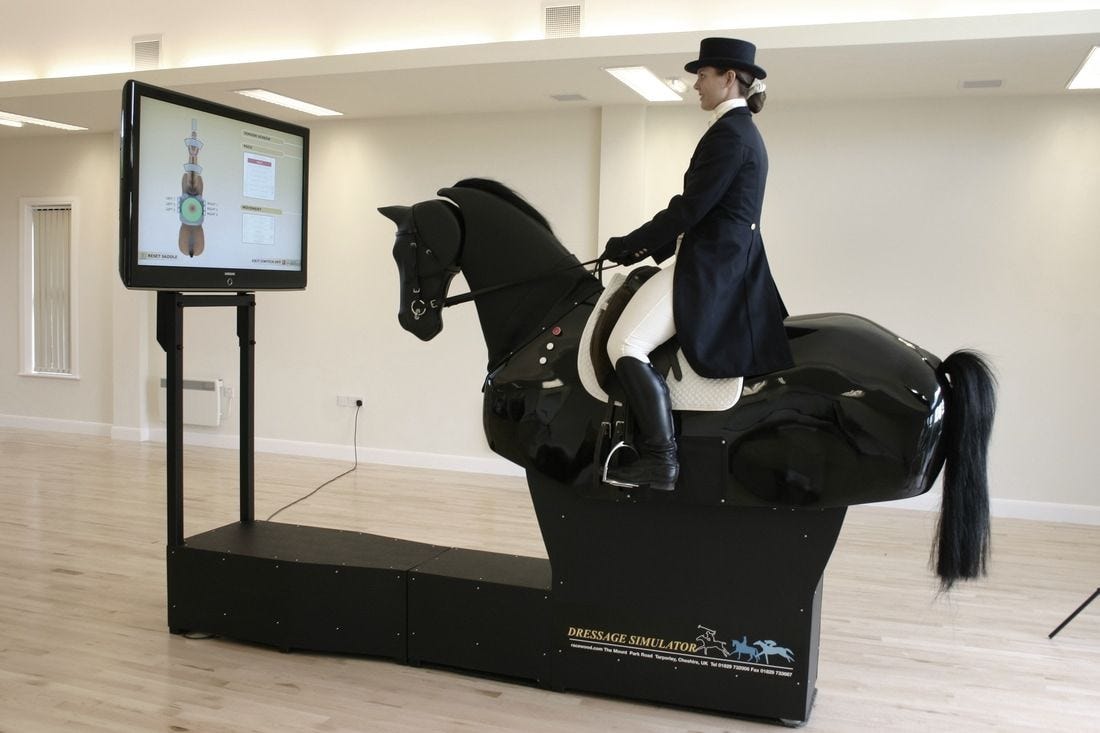
For riders, VR can be used to improve position, balance, and timing. Systems can track a rider's movements and provide real-time feedback, highlighting areas for improvement. It’s also useful for practicing specific maneuvers, like dressage tests or jumping courses. Riders can run through routines repeatedly, refining their technique without the physical strain on the horse.
Rehabilitation is another key area. Both horses and riders recovering from injury can use VR to maintain fitness and rebuild confidence in a controlled environment. A horse recovering from a lameness issue, for example, could walk or trot through a virtual arena, gradually increasing the intensity of the exercise. For 2026, I anticipate more sophisticated biofeedback integration, where the VR environment dynamically adjusts to the horse’s or rider’s physiological state.
Currently, a full-body haptic suit that perfectly replicates the feel of riding isn’t widely available or affordable. However, systems that provide feedback through seat and rein simulators are becoming more common. These systems, combined with high-quality visuals and realistic horse models, can create a surprisingly immersive training experience.
The hardware and software stack
The foundation of any VR training system is the hardware. Headsets like the Meta Quest 3 and HTC Vive are popular choices, offering high-resolution displays and motion tracking capabilities. The Meta Quest 3, for example, boasts a resolution of 2064 x 2208 pixels per eye, providing a clear and immersive visual experience. More advanced setups might incorporate external tracking systems for greater precision.
Software is where the real magic happens. Several companies are developing simulation platforms specifically for equestrian training. These platforms typically include a library of horse models, customizable environments, and training exercises. The quality of the horse physics is crucial – a realistic simulation requires accurate modeling of equine biomechanics.
Currently, horse physics in VR is still a work in progress. Achieving truly realistic movement and responsiveness is a significant challenge. However, developers are making progress, and I expect to see substantial improvements in the next few years. There aren't yet widely adopted SDKs specific to equestrian VR, meaning a lot of development is custom-built.
Environment creation tools allow trainers to design virtual arenas, cross-country courses, or even entire landscapes. Some platforms offer pre-built scenarios, while others allow for complete customization. The ability to create realistic and challenging environments is essential for effective training.
Virtual riding communities
VR training isn’t just changing how we train; it’s also impacting equestrian communities. We’re beginning to see the emergence of virtual riding clubs, where riders can connect and train together in shared virtual spaces. This is particularly appealing to individuals who live in areas with limited access to equestrian facilities or experienced trainers.
Online competitions are also gaining traction. Riders can compete in virtual dressage tests or jumping courses, with scores judged by qualified officials. While not a replacement for real-world competition, virtual events offer a convenient and affordable way to test skills and build confidence. The suburbanjunglegroup.com source highlights towns popular with equestrians; VR potentially reduces the need to live near these areas.
This technology can connect riders and trainers across geographical boundaries. A rider in California could receive instruction from a renowned coach in Germany, all without leaving their home. This opens up new opportunities for learning and collaboration. It also allows trainers to reach a wider audience and expand their businesses.
I believe that VR will foster a more inclusive equestrian community. It lowers barriers to entry, making the sport more accessible to individuals with disabilities or limited financial resources. It also allows riders to train safely and effectively, regardless of weather conditions or time constraints.
Would a high-quality VR riding simulator influence your decision about where to live, such as proximity to horse facilities?
Vote below and share how much access to VR equestrian training could shape your ideal horse-friendly community.
What it costs to go virtual
The cost of setting up a VR training facility varies widely depending on the level of sophistication. A basic setup, including a VR headset, a gaming PC, and some basic software, could cost around $2,000 to $3,000. More advanced systems, with motion capture and haptic feedback, could easily exceed $10,000.
Ongoing costs include software licenses, which can range from a few hundred dollars per year to several thousand, depending on the features and support offered. Maintenance and upgrades are also factors to consider. Subscription-based VR riding services are beginning to emerge, offering access to a library of training exercises and virtual environments for a monthly fee.
Comparing these costs to traditional equestrian expenses, VR can be a relatively affordable option. A single riding lesson can cost $50 to $100 or more. Boarding a horse can easily exceed $500 per month. Competition expenses can be even higher. While the initial investment in VR can be significant, the long-term savings can be substantial.
Currently, VR training is likely more accessible to professionals and serious enthusiasts. However, as the technology becomes more affordable and widespread, I expect it to become more accessible to the average rider. The decreasing cost of VR headsets and the emergence of more affordable software options will play a key role in this trend.
VR vs. Traditional Equestrian Training: A Comparative Overview (Projected to 2026)
| Training Aspect | Virtual Reality Training | Traditional Training |
|---|---|---|
| Cost | Potentially Medium – Initial investment in equipment and software, but potentially lower long-term costs compared to facility rental and extensive instructor fees. | Medium to High – Includes costs for lessons, boarding, facility rental, horse ownership/leasing, and equipment. |
| Time Commitment | Medium – Training sessions can be shorter and more frequent, fitting into varied schedules. Travel time is eliminated. | High – Requires significant time for travel to facilities, lessons, horse care, and practice. |
| Risk of Injury (Rider) | Low – Simulated environment eliminates the risk of falls and horse-related injuries. | Medium to High – Inherent risks associated with riding live animals, including falls and potential for serious injury. |
| Accessibility | Medium – Dependent on access to VR equipment and reliable internet connectivity. Expanding availability of VR facilities. | Medium – Limited by geographical location of stables and instructors. May be inaccessible to those with mobility issues or limited transportation. |
| Customization | High – Training scenarios can be tailored to individual skill levels and specific goals. Allows for repetition of challenging maneuvers in a safe environment. | Medium – Customization relies on instructor expertise and the horse’s capabilities. Progress is dependent on the horse's learning curve. |
| Horse Welfare | Not Applicable – Does not involve live animals, eliminating concerns for horse welfare during training. | Requires careful consideration of horse welfare, including appropriate conditioning, tack fit, and training methods. |
| Environmental Impact | Low – Reduced need for land use and horse care resources. | Medium to High – Requires land for facilities, generates waste, and has a carbon footprint associated with horse care and transportation. |
Illustrative comparison based on the article research brief. Verify current pricing, limits, and product details in the official docs before relying on it.
What to expect by 2026
Looking ahead to 2026 and beyond, the future of VR in equestrianism is bright. I expect to see significant advancements in both hardware and software. Headsets will become lighter, more comfortable, and offer even higher resolution displays. Haptic feedback technology will become more sophisticated, providing a more realistic sense of touch and movement.
AI-powered virtual trainers could become commonplace. These AI systems could analyze a rider’s performance in real-time, providing personalized feedback and guidance. They could also adapt the training program to the rider’s individual needs and goals. Imagine a virtual coach that understands your strengths and weaknesses and helps you reach your full potential.
Integration of VR riding into equestrian competitions is another plausible scenario. Virtual dressage tests or jumping courses could be used as qualifying events for major championships. This would open up new opportunities for riders to compete and showcase their skills.
By 2026, VR won't replace the smell of hay and leather, but it will be a standard tool for riders who want to sharpen their eye for a jump distance or memorize a dressage test without tiring out their horse. It's a practical shift for a sport that is usually tied to very specific locations.


No comments yet. Be the first to share your thoughts!